
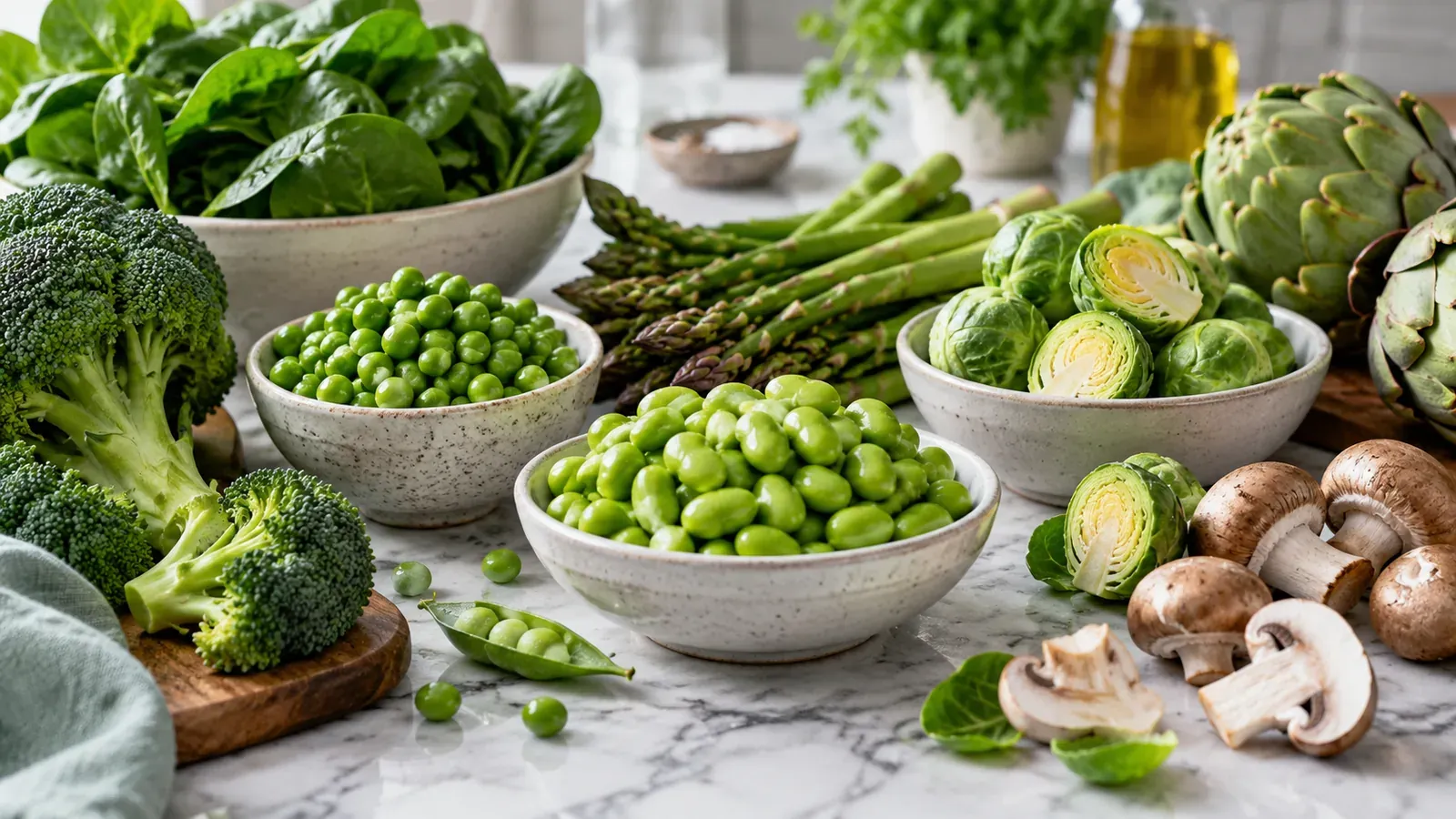
High-Protein Vegetables: What Actually Has Protein
No vegetable is going to carry a meal’s protein the way meat, eggs, or dairy can. But some vegetables genuinely have more protein than people expect, and it’s worth knowing which ones those are before you assume a side dish is contributing nothing. Numbers below are per typical serving, calculated from USDA FoodData Central at the serving sizes the FDA uses in its own raw produce nutrition table.
Every common vegetable, ranked by protein
All raw except edamame, which is for frozen edamame, cooked.
| Vegetable | Serving | Protein | Calories | Protein per 100 cal |
|---|---|---|---|---|
| Edamame | 1 cup (155g) | 18g | 190 | 10g |
| Green peas | 1 cup (145g) | 8g | 115 | 7g |
| Broccoli | 1 medium stalk (148g) | 4g | 50 | 8g |
| Mushrooms, white | 5 medium (84g) | 3g | 20 | 14g |
| Brussels sprouts | 1 cup (88g) | 3g | 40 | 8g |
| Snap peas | 1 cup, chopped (98g) | 3g | 40 | 7g |
| Sweet corn | kernels from 1 medium ear (90g) | 3g | 75 | 4g |
| Potato | 1 medium (148g) | 3g | 115 | 3g |
| Asparagus | 5 spears (93g) | 2g | 20 | 11g |
| Cauliflower | 1/6 medium head (99g) | 2g | 25 | 8g |
| Green beans | 3/4 cup, cut (83g) | 2g | 25 | 6g |
| Onion | 1 medium (148g) | 2g | 60 | 3g |
| Sweet potato | 1 medium (130g) | 2g | 110 | 2g |
| Spinach | 1 cup (30g) | 1g | 5 | 12g |
| Leaf lettuce | 1 1/2 cups, shredded (85g) | 1g | 15 | 9g |
| Summer squash | 1/2 medium (98g) | 1g | 15 | 8g |
| Zucchini | 1 cup, sliced (113g) | 1g | 20 | 7g |
| Iceberg lettuce | 1/6 medium head (89g) | 1g | 10 | 6g |
| Green cabbage | 1/12 medium head (84g) | 1g | 20 | 5g |
| Celery | 2 medium stalks (110g) | 1g | 15 | 5g |
| Tomato | 1 medium (148g) | 1g | 25 | 5g |
| Cucumber | 1/3 medium (99g) | 1g | 15 | 4g |
| Bell pepper, green | 1 medium (148g) | 1g | 30 | 4g |
| Radishes | 7 radishes (85g) | 1g | 15 | 4g |
| Carrot | 1 carrot (78g) | 1g | 30 | 2g |
| Green onion | 1/4 cup, chopped (25g) | under 1g | 10 | 6g |
Spinach is the one entry worth a footnote: raw, a cup barely registers, but spinach cooks down so much that a cooked cup (closer to what actually lands on a plate after sautéing) runs closer to 5g. More on that in Is Spinach High in Protein? Broccoli is worth its own look too, see Is Broccoli High in Protein? for how it stacks up against other vegetables specifically.
Protein per calorie flips the ranking
Sort the same table by the last column and the order changes. Mushrooms come out on top at 14g of protein per 100 calories, followed by raw spinach at 12g and asparagus at 11g, all ahead of edamame at 10g. For reference, chicken breast runs about 19g per 100 calories and plain nonfat Greek yogurt about 17g, so the top of this column isn’t far behind them on that measure.
The ratio leaves out how much food that takes. Here’s what reaching 25g of protein looks like from the per-calorie leaders and broccoli, next to edamame:
| To get 25g protein from | You’d need about | By weight |
|---|---|---|
| Edamame | 1.4 cups | 210g (under 1/2 lb) |
| Broccoli | 6 medium stalks | 890g (about 2 lb) |
| Mushrooms | 48 medium white mushrooms | 810g (about 1.8 lb) |
| Asparagus | 60 spears | 1,140g (about 2.5 lb) |
| Raw spinach | 29 cups | 875g (about 1.9 lb) |
Most vegetables are mostly water, so the protein is there relative to the calories but spread across a lot of weight. Edamame breaks the pattern because it’s a soybean, with far less water in it than a mushroom or a spinach leaf.
The starchy end of the table works the other way. Potatoes, sweet corn, and sweet potatoes post decent protein per serving but sit at the bottom per calorie, because most of their calories come from starch.
Why this distinction matters for cooking
A recipe built around zucchini noodles or cauliflower rice gets its protein number from the meat, seafood, or dairy in the dish, not from the vegetable swap. That’s true of the shrimp and cauliflower rice stir-fry and the garlic butter steak bites here: the vegetable is doing volume and fiber, the protein source is doing the protein.
Edamame is the one real exception on this list, and it isn’t close: at 18g per cup, it beats every other entry by more than double. If you want a vegetable that’s pulling real protein weight on its own, that’s the one to reach for. Besides eating it as a snack, I toss it into salads, stir-fries, and protein bowls when I want some extra protein and fiber without adding another serving of meat. Green peas are the next tier down at 8g a cup, genuinely useful for adding a few grams without carrying a whole meal, and broccoli follows at 4g a stalk.
Beans, lentils, and chickpeas aren’t on this table because they’re usually counted as legumes rather than vegetables. (Green peas and edamame are technically legumes too, but they get bought and cooked like vegetables, so they stay here.) They carry far more protein than anything on this table except edamame: about 18g per cooked cup of lentils and 15g for black beans or chickpeas. They’re covered in the plant-based section of Foods High in Protein.
This is food information, not a recommendation for how much of any of these you personally need.
FAQ
Can vegetables alone meet my daily protein needs?
Not realistically. Edamame is the exception, with about 1.4 cups matching the protein in a 3 oz cooked chicken breast, but nothing else on this list comes close without eating pounds of it. Vegetables are worth counting toward your total, they’re just not built to be the main source of it.
Does cooking change how much protein a vegetable has?
Cooking doesn’t add or remove protein, but it changes the serving size that fits on a plate. Spinach is the clearest example here: a cup of raw spinach packs down to a fraction of that once wilted, so a cooked cup carries several times the protein of a raw cup, just because more spinach fits in it.
Are frozen or canned vegetables lower in protein than fresh?
Generally no. Freezing and canning don’t meaningfully change a vegetable’s protein content; what changes more is sodium (canned) and texture. If a recipe calls for frozen peas or canned beans, the protein number holds up close to the fresh version.
For meals built around real protein sources with vegetables playing a supporting role, start at High-Protein Dinner Ideas or browse by protein source directly. For the foods that actually carry a meal’s protein, see High-Protein Foods.
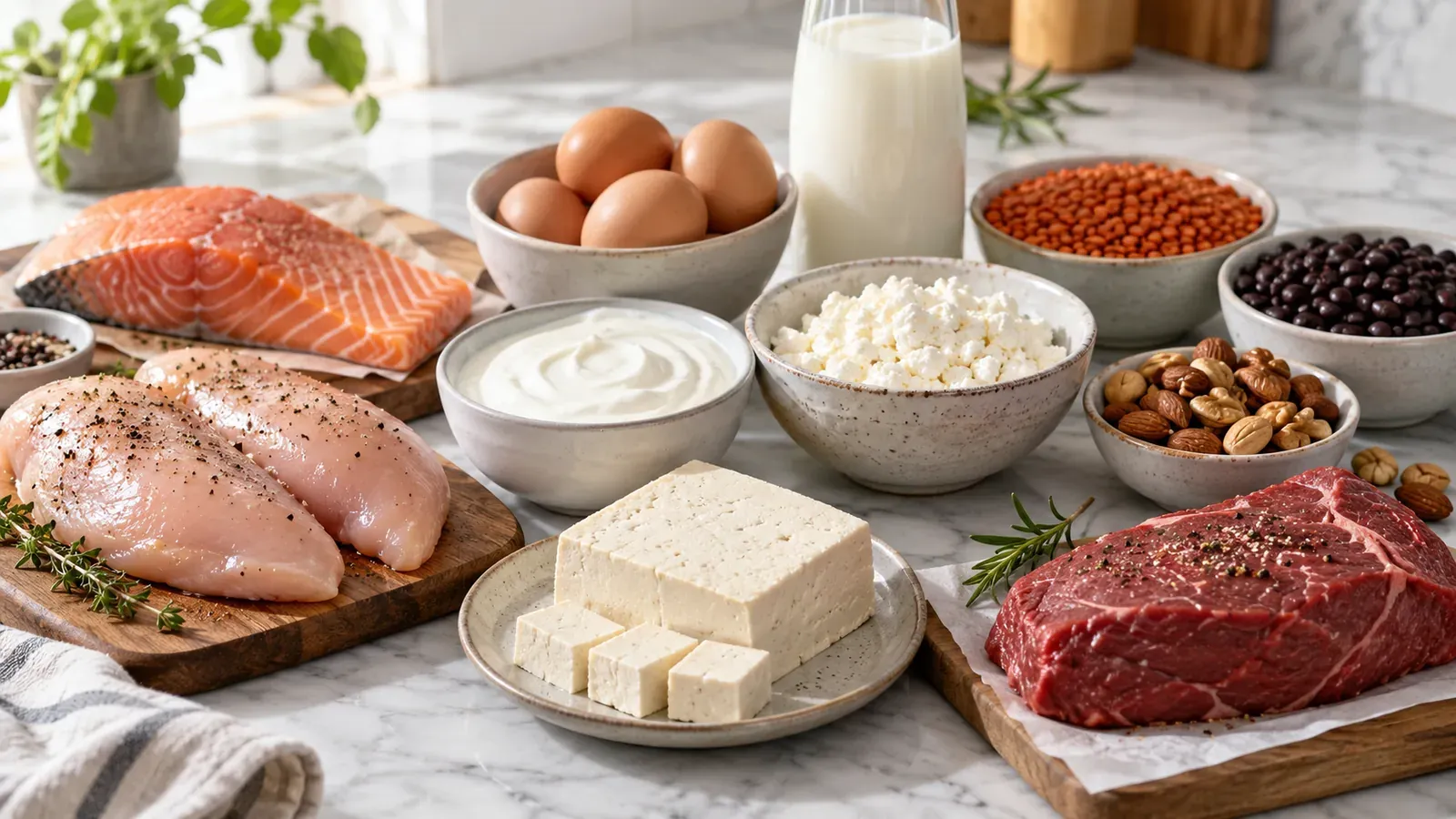
Foods High in Protein: A Real Reference List
Protein, calories, and protein per 100 calories for 44 foods high in protein, grouped by type and calculated from USDA FoodData Central. Not a guess.
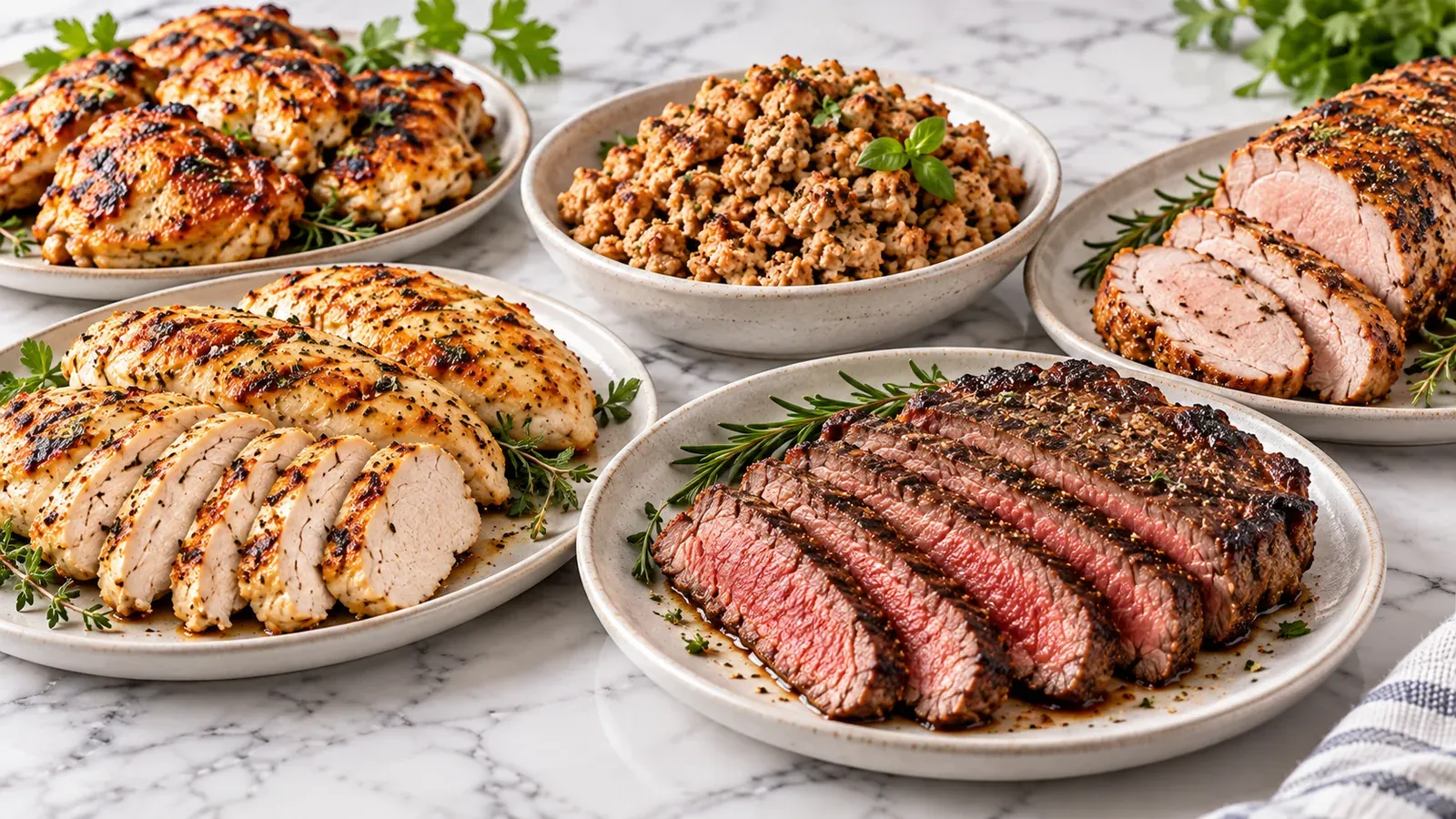
High-Protein Meats: Every Cut, Compared
Protein per serving for the actual cuts of chicken, turkey, beef, and pork people cook with, sourced from USDA FoodData Central.
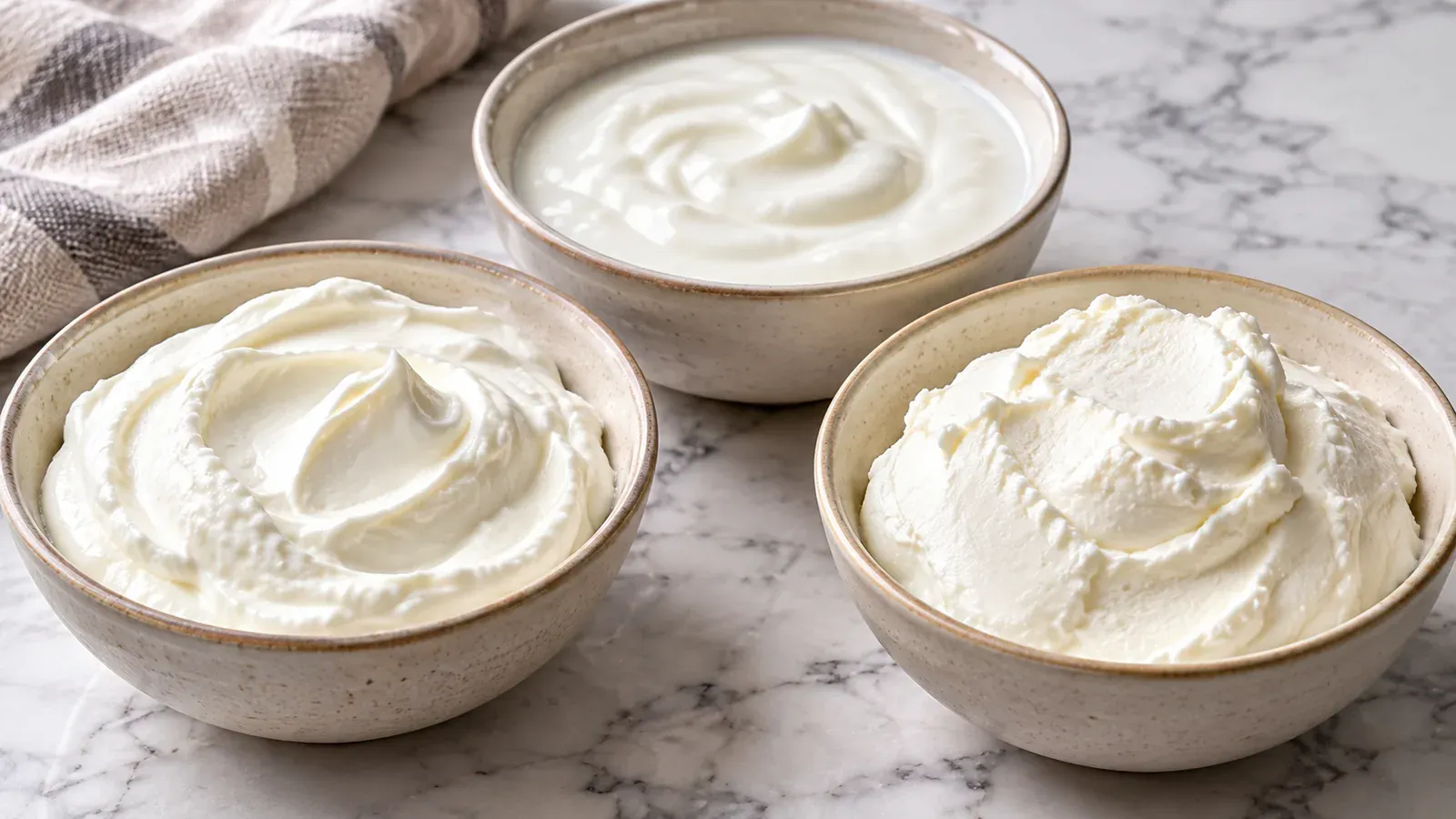
High-Protein Yogurt: 9 Brands Compared by the Label
Protein, calories, and added sugar for 11 high-protein yogurts from 9 brands, taken from each brand's own nutrition label and compared per 100g so cup size doesn't skew it.