
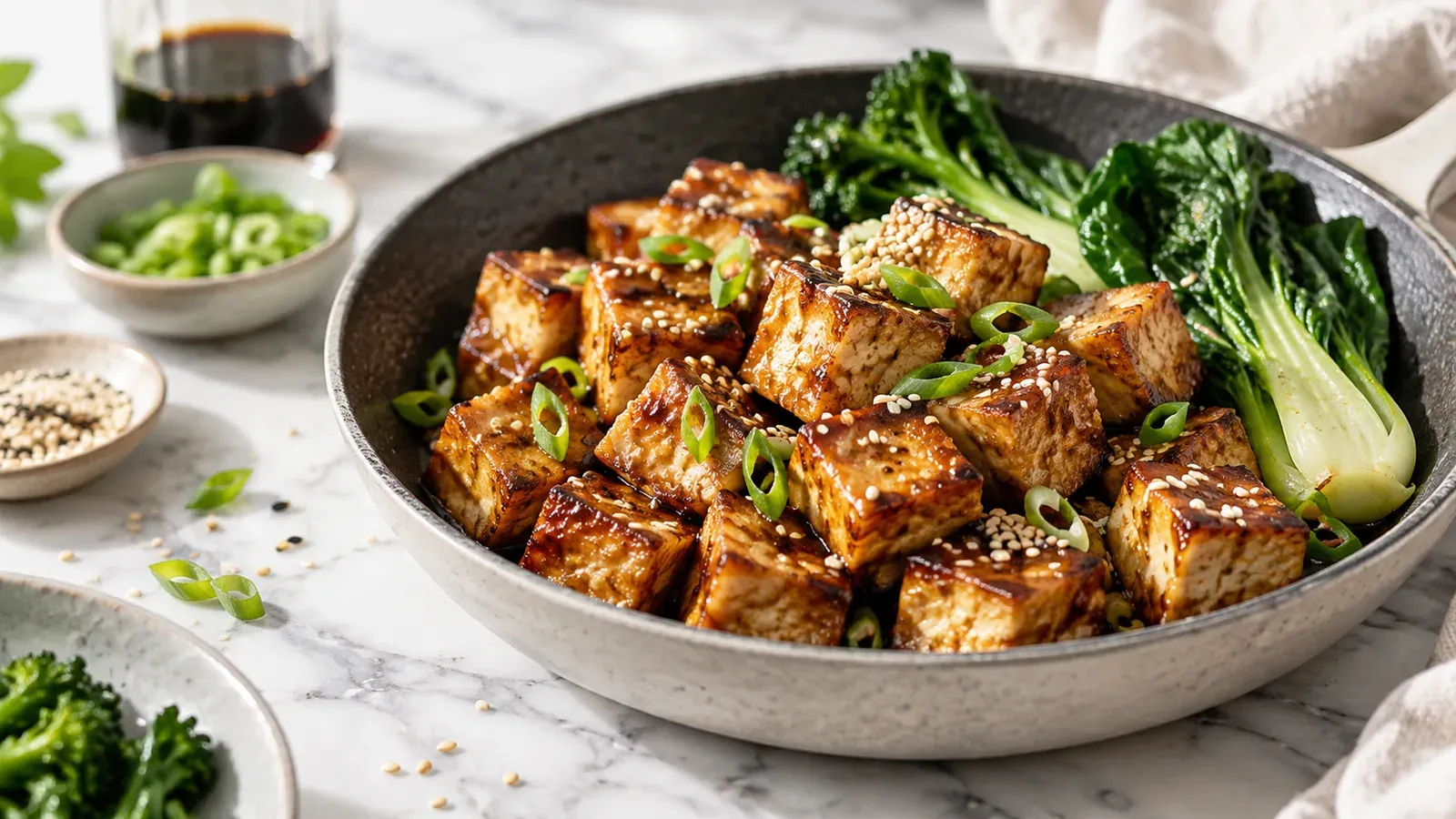
Is Tofu High in Protein?
Yes. Typical US grocery-store firm tofu carries about 9 to 11g of protein per 100 grams, so a 14 oz block holds roughly 36 to 43g. That’s close to eggs by weight, and because tofu is lower in calories, it actually beats eggs on protein per calorie.
The actual numbers
Tofu varies more by type and brand than most protein foods, so here’s what USDA lists for the kinds you’re likely to buy:
| Tofu | Protein per 100g | Per 3 oz | Per 14 oz block | Protein per 100 cal |
|---|---|---|---|---|
| House Foods Premium Firm | 10.9g | 9g | 43g | 13g |
| Extra firm (nigari) | 10g | 8g | 40g | 12g |
| Azumaya Firm | 9.1g | 8g | 36g | 11g |
| Silken, soft | 4.8g | 4g | 19g | 9g |
USDA also lists a firm tofu made with calcium sulfate at 17.3g per 100 grams, which is where the higher numbers you’ll see quoted online come from. It’s a denser product than the typical supermarket block, so check the nutrition label on yours: it will say which range you’re in.
How it compares
By weight, typical firm tofu lands about even with cooked lentils and black beans (about 9g per 100 grams each) and a little behind a hard-boiled egg (about 13g).
Per calorie is where tofu pulls ahead. Firm tofu runs about 11 to 13g of protein per 100 calories, against about 8g for eggs, about 8g for lentils, and about 7g for black beans. Beans and lentils bring more fiber to the trade, but for protein per calorie among plant foods, tofu is hard to beat. It’s a genuine protein source on its own, not something that needs meat added to “count.”
Why tofu sometimes gets dismissed
Tofu has a reputation as a “diet food” filler rather than a real protein source, which isn’t accurate. The confusion usually comes from silken tofu, a softer, higher-water-content variety used in smoothies and desserts, which has less than half the protein density of firm or extra-firm tofu. If a recipe calls for firm tofu and delivers a real protein number, that’s not an accident, it’s the right variety doing the job it’s built for.
Where it shows up in real cooking
The high-protein tofu scramble on this site uses a full 14 oz block split three ways, about 14g of protein per serving from typical firm tofu: pressed and crumbled, it holds its own as the main protein source in a dish with no eggs or dairy at all.
FAQ
Is silken tofu as high in protein as firm tofu?
No, silken tofu carries meaningfully less. USDA lists soft silken tofu at about 5g of protein per 100 grams, against about 9 to 11g for typical firm tofu. The difference comes down to water content: silken tofu is barely pressed, so it’s mostly water by weight, while firm tofu has had much of that water removed.
Is tofu a complete protein?
Yes. Tofu contains all nine essential amino acids the body can’t produce on its own, which puts it in the same category as animal proteins for amino acid completeness, something most other plant-based whole foods don’t offer on their own.
Why do some sources say tofu has 17g of protein per 100 grams?
USDA lists one firm tofu made with calcium sulfate at 17.3g per 100 grams, and it gets quoted a lot. It’s a much denser product than the firm and extra-firm blocks in most US grocery stores, which USDA’s own branded entries put at 9 to 11g. The label on your block tells you which kind you have.
For more, browse High-Protein Vegan Meals or the full High-Protein Foods reference list.
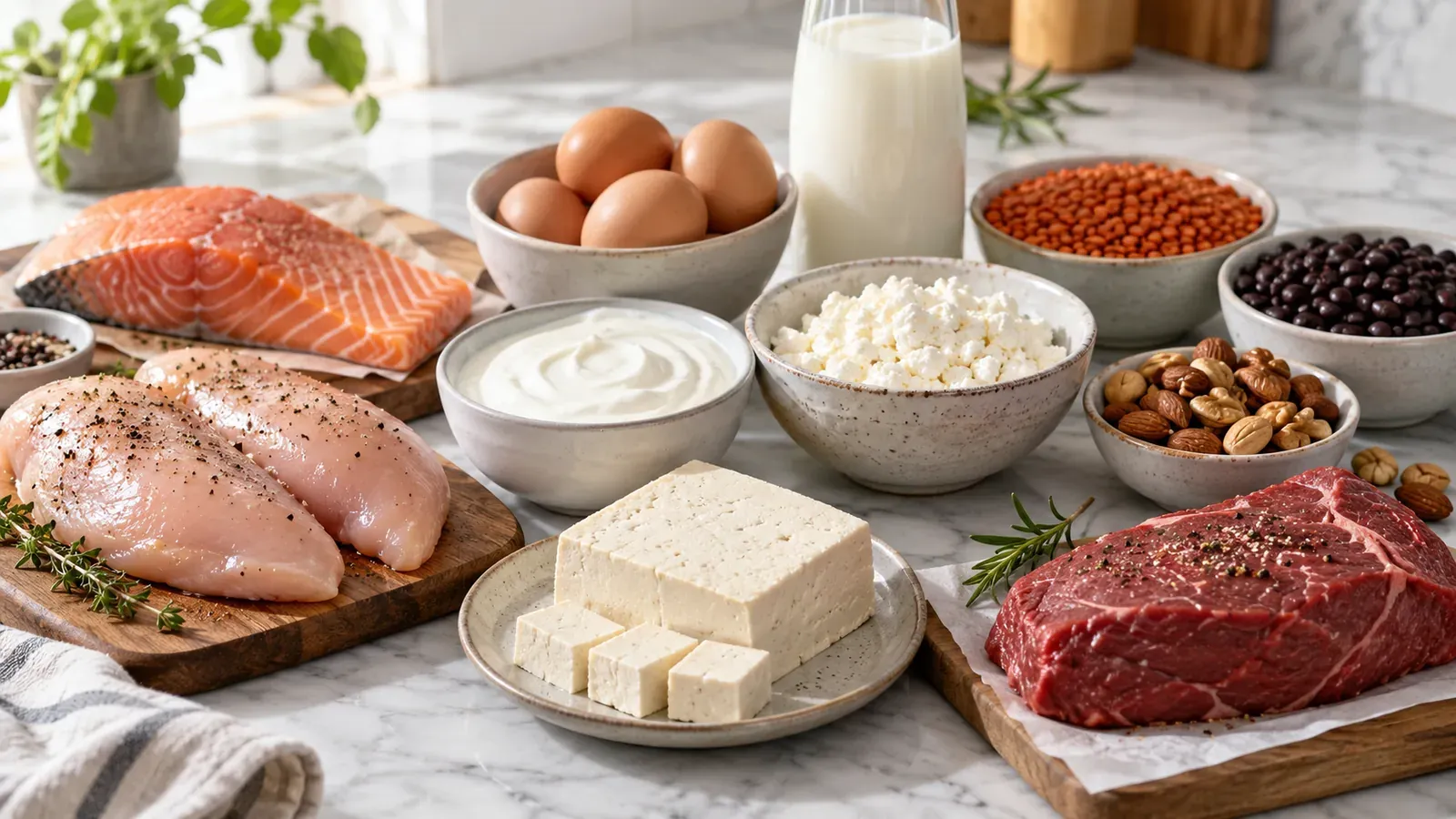
Foods High in Protein: A Real Reference List
Protein, calories, and protein per 100 calories for 44 foods high in protein, grouped by type and calculated from USDA FoodData Central. Not a guess.
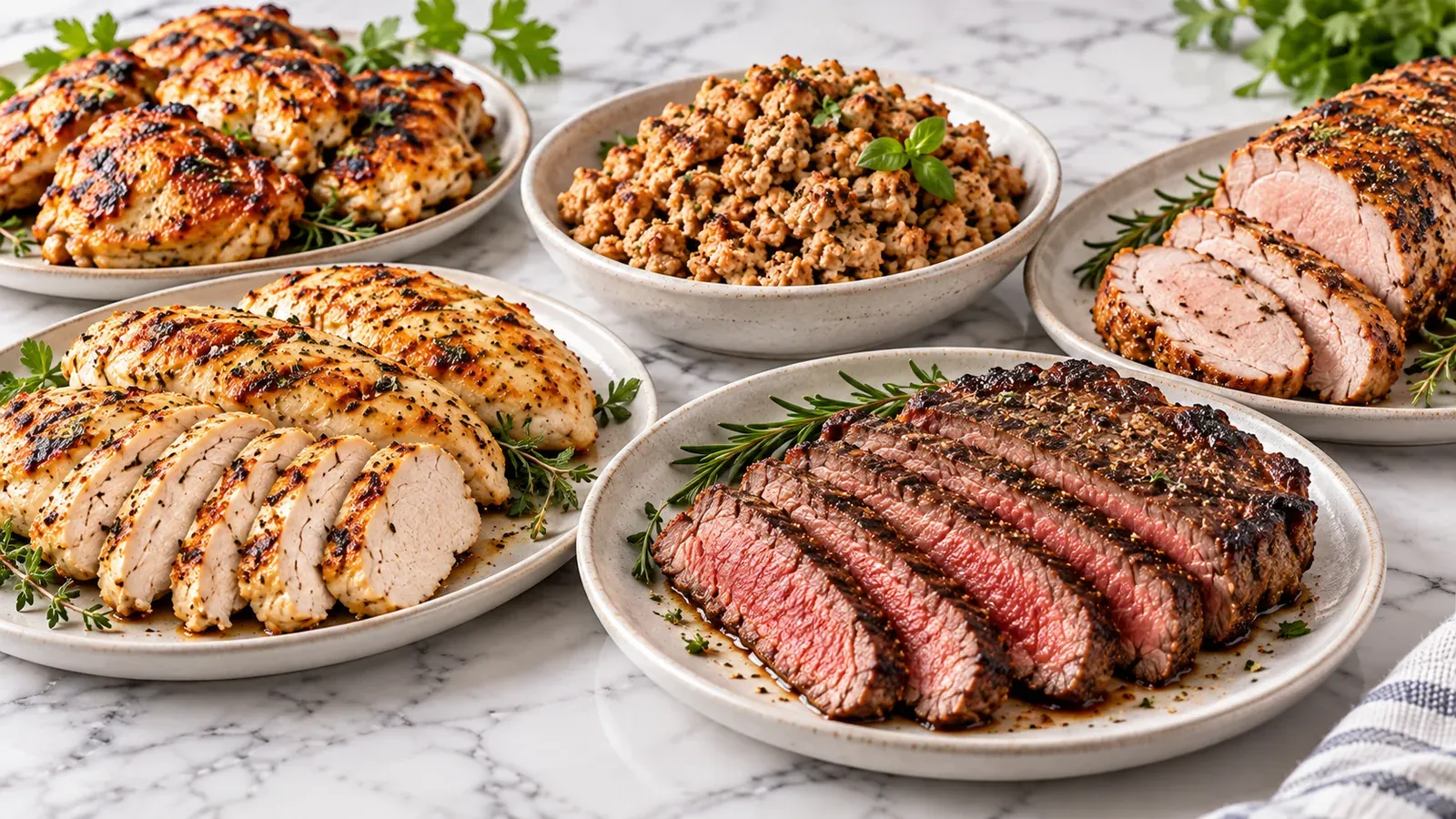
High-Protein Meats: Every Cut, Compared
Protein per serving for the actual cuts of chicken, turkey, beef, and pork people cook with, sourced from USDA FoodData Central.
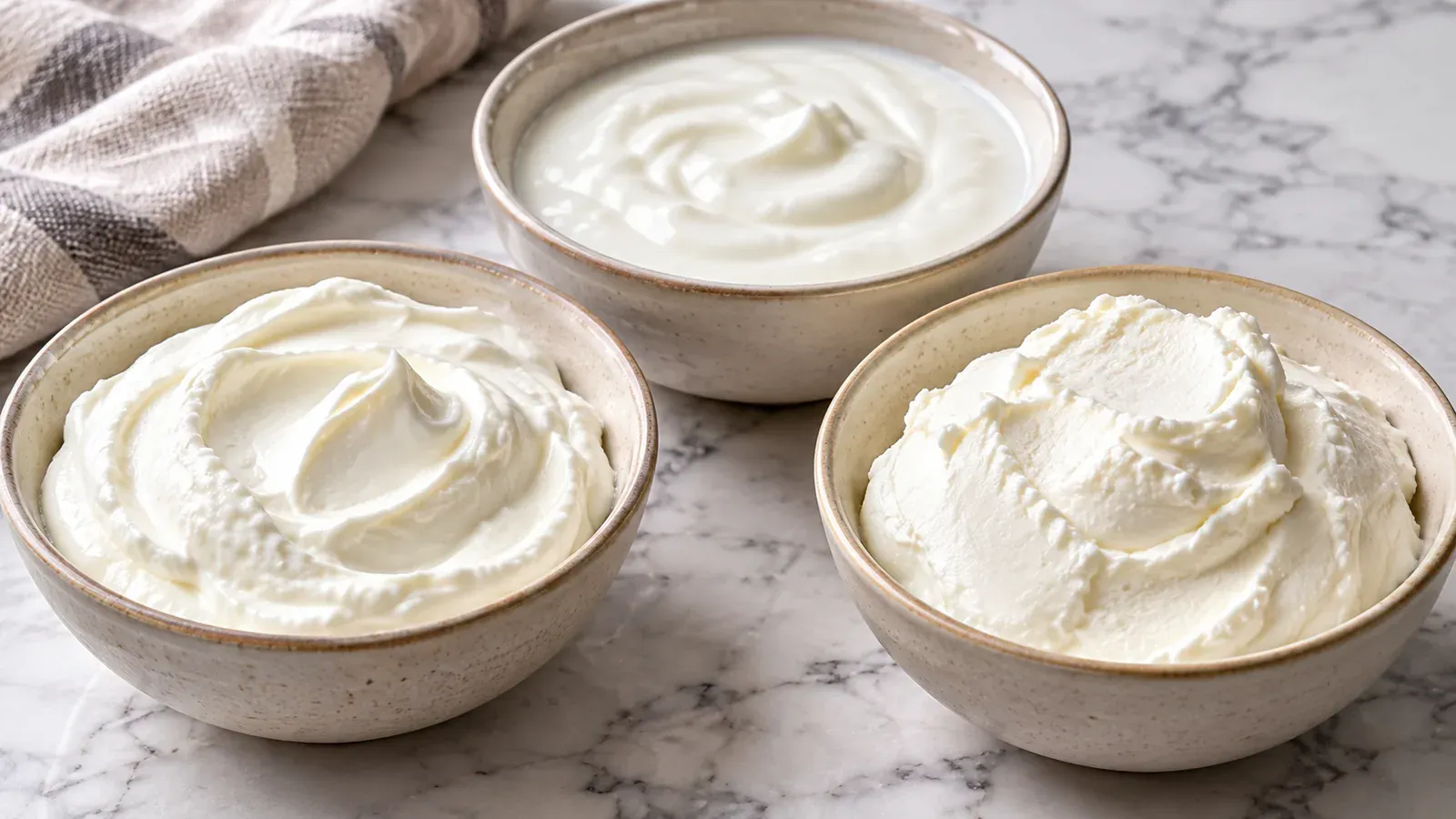
High-Protein Yogurt: 9 Brands Compared by the Label
Protein, calories, and added sugar for 11 high-protein yogurts from 9 brands, taken from each brand's own nutrition label and compared per 100g so cup size doesn't skew it.